
 Tamil
Tamil

 English
 Arabic
 Vietnamese
 Filipino
 Indonesian
 Español




 உள்நுழைய

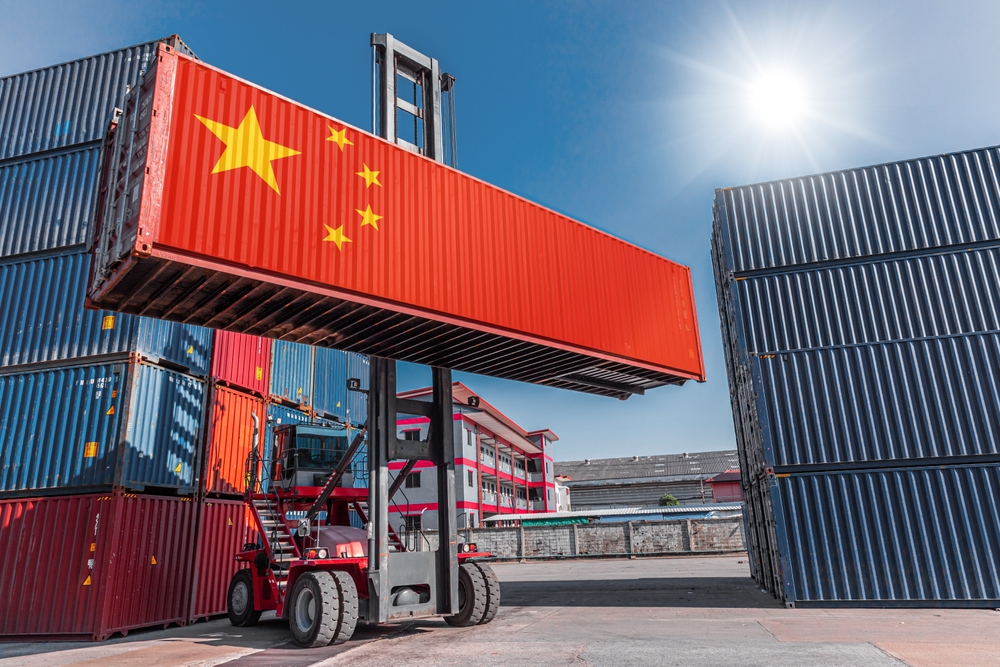
China is entering 2026 with a clearer and more forceful semiconductor playbook. The latest signal is not a slogan but an operational requirement that increasingly shows up in project approvals and procurement. New fabs are expected to source at least 50% of their manufacturing equipment from domestic suppliers. For investors, this is more than a policy headline. It can redirect capital spending, reshape order books, and shift relative performance across Asian tech equities.
What happened
Industry reporting over recent weeks indicates that new semiconductor projects in China are being assessed against a threshold that targets at least 50% domestic equipment. The approach is described as practical rather than purely formal. It is enforced through approval processes and purchasing decisions tied to those approvals. The immediate implication is simple. Companies planning new capacity must adjust tool selection to meet a defined domestic share.
There is also an important nuance around the most advanced process steps. Where local alternatives are still limited, the application of the threshold can be more flexible. Even with that flexibility, the direction is unambiguous. China is turning domestic substitution from an aspiration into a measurable condition that influences whether a project moves forward.
Why it matters for stocks
A 50% threshold acts like a demand anchor for local equipment makers. It effectively guarantees a baseline share of spending that would otherwise flow to established foreign suppliers. That strengthens the equity narrative for Chinese tool companies that are pushing into critical segments of the fab toolchain. Reuters specifically referenced firms such as Naura and AMEC in the context of domestic equipment momentum.
The flip side is risk for foreign suppliers with meaningful China exposure. If procurement shifts structurally toward local tools, the impact can show up in growth rates and margins, especially if pricing pressure rises to defend share. Reuters also cited companies such as Lam Research and Tokyo Electron as foreign suppliers that could face substitution pressure. For investors across Asia, the key question becomes who captures the next wave of tool orders as capacity expands and who loses incremental share even if overall demand remains firm.
The link to the AI boom
The broader catalyst is the AI hardware cycle and the availability of compute. Reuters reported that the United States would allow exports of Nvidia H200 chips to China under specific conditions that included a 25% fee on sales. If that channel reopens meaningfully, it can support another leg of data center buildouts in the region. That, in turn, lifts demand for the surrounding supply chain, from advanced logic to memory and the equipment needed to keep capacity scaling.
Memory is an equally important part of the AI equation. Reuters reported that ChangXin Memory Technologies (CXMT) is preparing a Shanghai listing of ¥29.5 billion, about $4.22 billion, and the filing referenced an issuance of 10.6 billion shares. The report also stated that CXMT held around 4% of the global DRAM market in the second quarter of 2025 and that the company expected revenue for 2025 to rise by as much as 140%. Reuters added that CXMT is investing in high-bandwidth memory, with production at a new packaging facility in Shanghai targeted for late 2026.
A useful contrast
While China pushes domestic substitution through procurement thresholds, the United States is tightening how foreign firms operate fabs inside China by moving toward annual licensing. Reuters reported that Samsung Electronics and SK Hynix received one-year approvals for 2026 to bring chipmaking equipment into their China facilities, reflecting a shift from broader exemptions to a year-by-year framework. That increases operational uncertainty because modernization plans become tied to recurring approvals rather than long-horizon visibility.
Reuters also reported a related data point for Taiwan. TSMC received a one-year license to import US tools for its Nanjing operations, which focus on mature technologies. Reuters noted that the Nanjing unit accounted for about 2.4% of TSMC’s revenue in 2024 based on the company’s annual report. Put together, these signals reinforce a central theme for 2026. The Asian semiconductor cycle is not being driven only by AI demand. It is being shaped by policy levers that decide who can buy equipment, from whom, and in what share.
Sources