
 Indonesian

 English
 Tamil
Tamil
 Arabic
 Vietnamese
 Filipino
 Español




 Masuk
Masuk

A Signal of Confidence
When a company’s management begins to buy back its own shares on a large scale, it sends a clear message to the market about its confidence. According to data reported by CNBC, Xiaomi did exactly that on January 23, when it launched a massive share buyback program worth up to HKD 2.5 billion, equivalent to approximately USD 321 million. The market reacted immediately to the announcement, with the stock rising by more than 3% within a single trading day. Although the shares have been slightly down since the beginning of the year, at around -8%, this move follows earlier buybacks from mid-January and serves as a strong signal that the company views its current market valuation as an excellent investment opportunity.*
Xiaomi share price performance over the last 5 years
The Battle for Margins
The path to growth, however, is not without obstacles, and Xiaomi is currently facing an unexpected challenge in the form of a global hunger for artificial intelligence technologies. Manufacturers of memory modules are massively shifting their capacities toward the more lucrative AI segment, causing an acute shortage of chips for smartphones. This trend relentlessly pushes production costs higher, which in turn directly compresses margins across the entire Android ecosystem in China. Analysts at Morningstar have even begun lowering their forecasts for the entire smartphone market due to this shortage, forcing manufacturers to look for new ways to maintain profitability in an environment of rising input costs.
The Electric Revolution
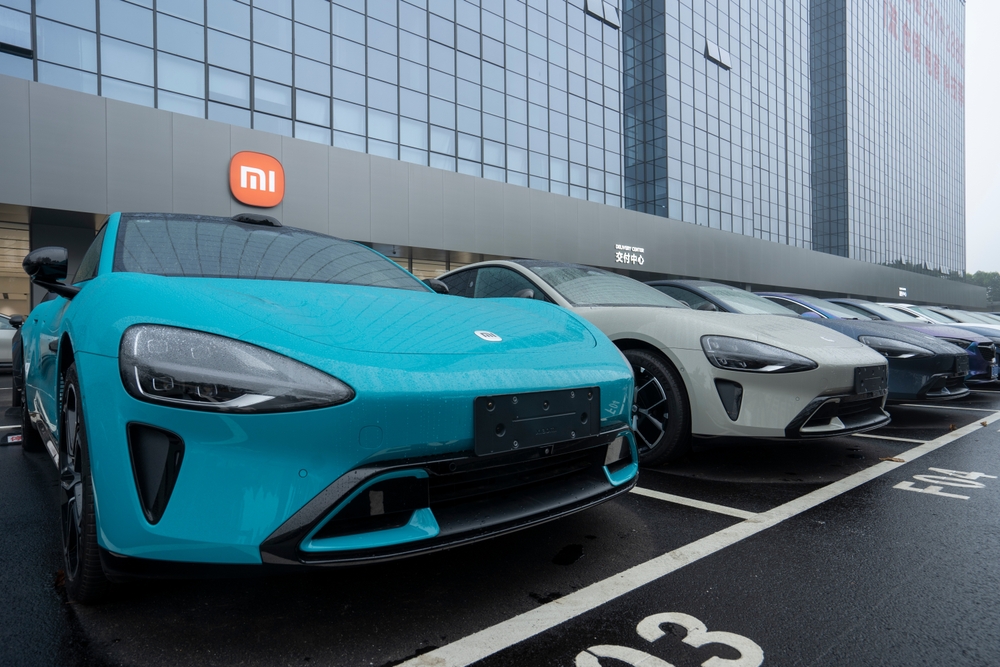
Entering the world of electromobility at a time of the most intense price war in China’s history requires exceptional courage. Xiaomi has it, as evidenced by the recent launch of the premium SU7 Ultra model, aimed at the most demanding customers. For 2026, the company has set a target of delivering 550,000 vehicles, a figure that some investors viewed with skepticism as a mild disappointment. In addition to intense competition, the sector is also facing downward pressure on margins due to changes in Beijing’s subsidy policies. Despite short-term negative sentiment fueled by viral reports of accidents, Xiaomi is not slowing down and is preparing for a massive global expansion of its automotive business.
A 50-Billion Plan
To reduce its dependence on uncertain suppliers, Xiaomi has made a strategic move by investing CNY 50 billion into its own semiconductor division. This ambitious project, with a ten-year horizon and launched in 2025, aims to develop proprietary chips and thus gain full control over both technology and costs. It is a clear response to the current disruptions in supply chains and a long-term bet on technological sovereignty.
Who Is Xiaomi For?
The overall investment picture of Xiaomi in 2026 is a mosaic of strong positives and real market risks. On one hand stands a strong brand with a diversified portfolio and active support for the share price through buybacks; on the other hand, investors are constrained by margin pressure in smartphones and fierce competition in the electric vehicle segment.
* Past performance is no guarantee of future results.